
The Rule of Thumb (and the Exceptions)
As a general rule, garage door springs give you weeks of warning before they fail completely — slower opening, odd noises, a door that looks crooked. The exceptions are the ones that matter most: a spring that's been cycling through a hot North Texas summer and a cold snap or two can fatigue from the inside out and show almost no visible warning before it lets go. Dust and grit from windy days can mask rust under a thin coating of grime, so a spring can look fine at a glance while it's actually corroding underneath. And if you've never looked at your springs before, you have no baseline — so the "gradual change" everyone talks about might already be well underway by the time you notice it.
That's why a quick visual and functional check every few months is worth five minutes, especially heading into the colder, wetter stretch of the year when metal fatigue and rust both get a boost.
The Walk-Through Checklist
Do this with the door closed, garage light on, and power to the opener disconnected if you plan to touch anything. You're looking, not adjusting.
1. Look at the coils themselves
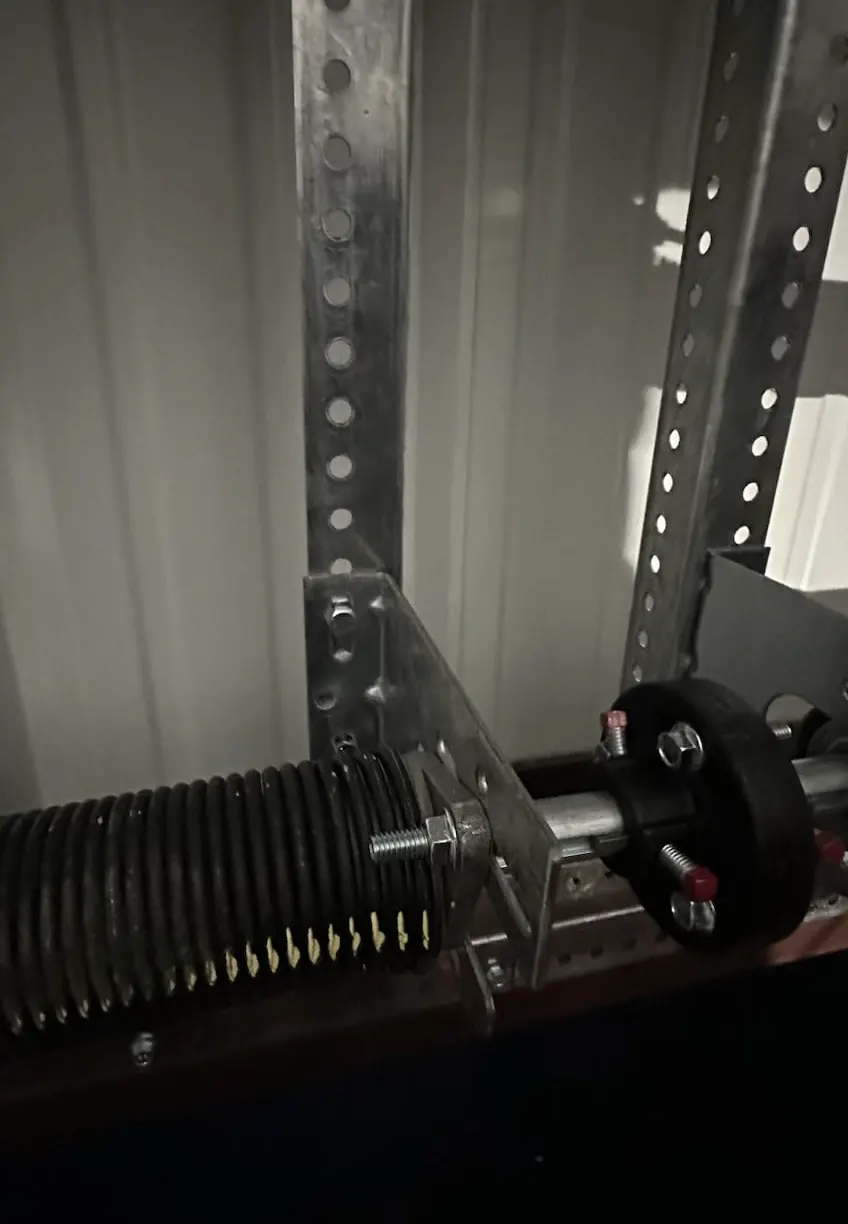
- Torsion springs (the one or two springs mounted horizontally above the door, on a metal shaft): Look for gaps between coils that seem wider than the rest of the spring, or a coil that looks twisted out of line. A stretched-looking gap usually means the spring has already lost tension and is working harder than it should to compensate.
- Extension springs (the long springs running along the horizontal tracks on either side, above the top of the door's travel): Check for coils that have separated or stretched unevenly compared to the rest of the spring. A permanently stretched section means the steel has started to give.
2. Check for rust and flaking
Surface rust alone isn't an emergency, but flaking rust that comes off when you run a cloth over the coil is a sign the metal underneath is pitted. Pitted spots are where springs snap first, because they concentrate stress. Humidity after a storm, combined with dust settling into the coil, speeds this up more than people expect.
3. Watch the door open and close
Stand back and watch the whole cycle. A door that opens crooked — one side visibly higher than the other, or a noticeable jerk partway up — usually means one spring (in a two-spring torsion system) is weaker than its partner. Doors with a single torsion spring will instead just open slower and more erratically overall.
4. Do the manual lift test
With the opener disconnected (pull the emergency release cord), lift the door by hand about halfway. A properly balanced door will stay put on its own or move with light, even resistance. If it crashes down or shoots up, the springs are no longer carrying their share of the door's weight, and your opener has been quietly compensating — which wears out the opener too.
5. Listen for new or different noise
A loud bang at some point in the past, even if the door still worked afterward, often means a spring partially failed or a winding cone slipped. A grinding or squealing sound during operation (not from the rollers, but from near the springs themselves) can mean metal-on-metal contact from a spring that's lost its shape.
6. Check how hard the opener is working
If the opener motor sounds like it's straining, runs noticeably hotter than usual, or takes longer to fully open the door than it used to, that's often the springs failing to do their job rather than a problem with the opener itself. Replacing an opener without addressing worn springs just gives you a stronger motor fighting the same underlying imbalance.
7. Inspect the cables and winding cones
While you're looking at the springs, glance at the cables running down to the bottom brackets and the winding cones at the ends of a torsion spring. Frayed cable strands or a cone that looks like it's slipped slightly out of position are both signs that something upstream — usually spring tension — is already off.
8. Count the years, if you can
Most torsion springs are rated for a number of open-close cycles rather than years, but as a rough guide, many last somewhere in the 7–12 year range under normal household use. If you know your springs are original to a build date older than that, treat any of the signs above as more urgent than you otherwise would.
What to Do If You Spot One of These
One early sign — a little rust, a faint uneven lift — is worth monitoring and maybe scheduling a maintenance check. Two or more signs together, especially a crooked door plus an opener that's straining, means the springs are actively failing and shouldn't be left for next month. Never try to adjust, remove, or re-tension a torsion spring yourself; the stored energy in a wound spring is enough to cause serious injury, and that's true whether the spring looks fine or already shows damage.
When to Call Lake Worth Garage Door
If your checklist turns up uneven lift, visible coil damage, or a door that's started banging or jerking, it's time to call. Our Spring Replacement service covers both torsion and extension systems, and we'll match the new spring's wire size and wind to your door's actual weight rather than guessing — mismatched springs are one of the most common reasons people end up calling twice. If nothing's obviously wrong but you want a second set of eyes before winter weather sets in, our Garage Door Maintenance visit covers the spring system along with cables, rollers, and balance, catching the wear that's easy to miss from the garage floor.
If you're anywhere in Lake Worth, Fort Worth, Sansom Park, White Settlement, River Oaks, Westworth Village, Benbrook, or Azle and your garage door isn't lifting the way it used to, give Lake Worth Garage Door a call today and get it checked before it becomes an emergency.