
What Another Season of "Not My Job" Actually Costs
Here's the fight in every rental house with a garage: the opener grinds, the door won't seal at the bottom, or a cable looks frayed — and nobody wants to be the one who pays for it. Put that argument off until the next cold snap or ice event and you're not saving money, you're betting on it. A door that won't seal right lets in wind and dust now, and if an ice morning hits later this winter, a door that's already struggling to close evenly is a lot more likely to bind, jump track, or strand a car inside. Settling who's responsible for what — before it's an emergency — is cheaper than settling it after.
The General Split, in Plain English
Most leases follow a basic logic: the landlord owns the structure and its major systems, the tenant is responsible for day-to-day use and reporting problems quickly. A garage door usually falls under "major system," similar to a water heater or HVAC unit. But the actual lease language is what governs — this is a general pattern, not a legal rule, so read what you signed.
Typically the Landlord's Job
- Spring replacement — torsion and extension springs wear out from age and cycle count, not tenant misuse
- Opener repair or replacement when it fails from normal wear
- Cable, track, and roller repair due to age
- Panel damage from storms, hail, or wind — this is a structure issue, not a tenant-caused one
- Keeping the door reasonably weathertight against wind-driven dust and rain
Typically the Tenant's Job
- Reporting problems promptly instead of living with them for months
- Not forcing a door that's binding or off-track
- Basic care: keeping the track clear of debris, not slamming the door, not overriding safety sensors
- Damage caused by the tenant's own actions — backing into the door, letting kids treat it like playground equipment, ignoring an obvious problem until it gets worse
The gray area is wear that gets worse because nobody said anything. A slow spring failure that turns into a dropped door, or a sensor issue nobody mentioned that eventually fries the opener — those arguments get messy fast, which is exactly why move-in documentation matters.
The Move-In Inspection: What to Actually Check
Before you sign, walk the garage door with your phone out. This takes fifteen minutes and saves hours of arguing later.
- Balance test: disconnect the opener (pull the red emergency release cord) and lift the door halfway by hand. It should stay put. If it drops or flies up, the springs are already off — note it in writing before you take possession.
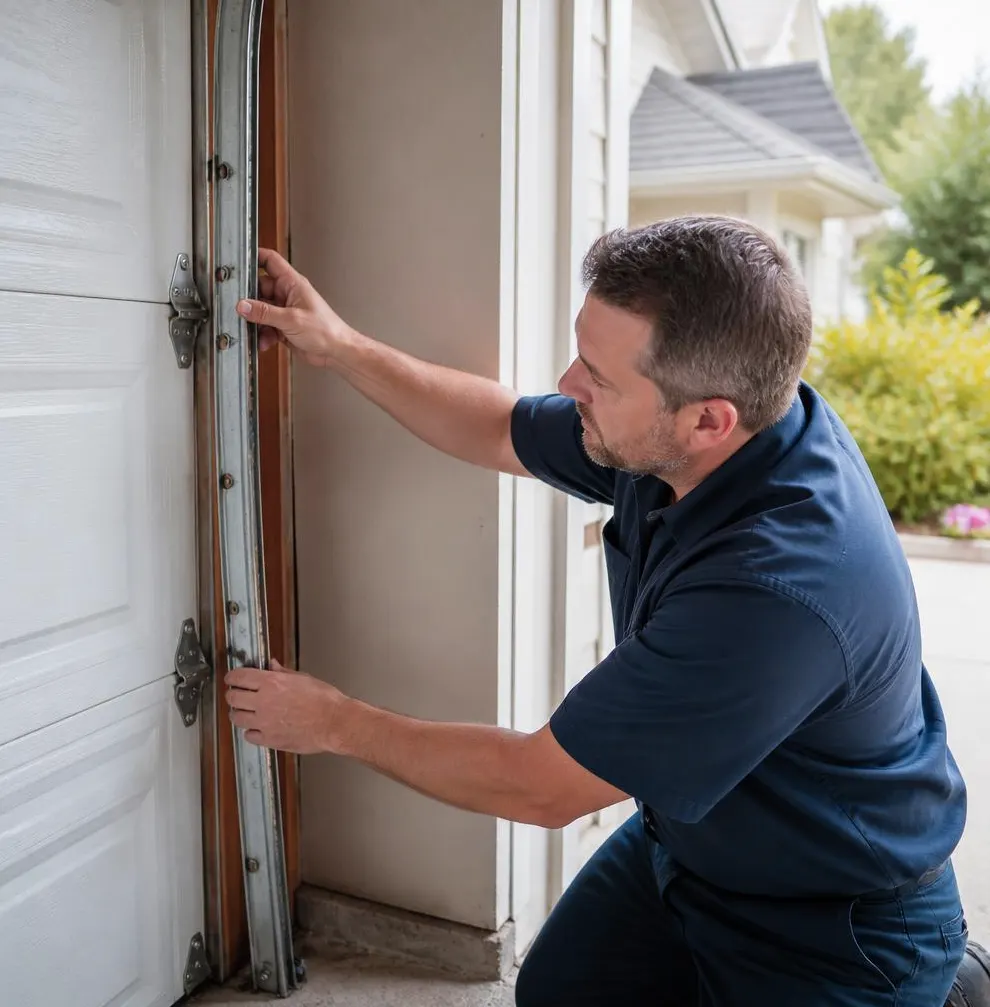
- Springs and cables: look for rust, fraying, or visible gaps in the coils. Don't touch them, just look and photograph.
- Panels and seal: check for dents, warping, or daylight showing around the edges when closed. In this climate, a bad seal means more blowing dust and water intrusion during storms.
- Weatherstripping: cracked or missing strips at the bottom are cheap to replace but worth noting who's expected to handle it.
- Opener and remotes: test that the door reverses when it hits an object (lay a 2x4 in its path) and that the photo-eye sensors work. Confirm how many remotes/keypads come with the unit.
- Track alignment: look for gaps between rollers and track, or visible bends.
Photograph everything, date-stamp it, and email it to the landlord or property manager the same day — not as a complaint, just as a record. "Here's the condition at move-in" protects both sides.
When It's Neglect vs. Just Old
Landlords and tenants both lean on "normal wear" when it's convenient. A rough rule: if a part failed on a timeline consistent with its age and use (springs typically last several years and a set number of open/close cycles), that's wear. If something broke right after a specific event — a car backing into the door, a kid prying at the bottom, someone forcing a door that was already stuck — that's a different conversation.
When to Call Lake Worth Garage Door
If you're moving in and want an unbiased second opinion before you sign the inspection notes, that's worth a quick visit. We also handle the in-between cases landlords and tenants argue about most — a scheduled Garage Door Maintenance check can document the real condition of springs, cables, and opener settings on paper, which settles a lot of disputes before they start. And if something fails after hours, our Emergency Garage Door Service gets the door secured and safe the same day, no matter whose name is on the lease.
If you're in Lake Worth, Fort Worth, Sansom Park, White Settlement, or anywhere nearby and need a straight answer on what's wrong with a rental garage door, give Lake Worth Garage Door a call — we'll tell you what it is, not just who should pay for it.